


We often notice the same question appearing in different forms: Why do some people react from fear, while others respond with clarity, patience, and purpose? One useful way to approach that question is to map stages of consciousness development.
Consciousness development is the gradual shift in how we perceive ourselves, others, and life itself.
This is not about labeling people as better or worse. It is about seeing patterns. When we can name patterns, we can work with them. That changes how we relate, decide, and grow.
Many people first become interested in this topic after a hard season. A conflict. A loss. A success that felt empty. We have seen that these moments often expose a gap between outer life and inner maturity. That gap is where mapping becomes useful.
Growth becomes clearer when it becomes visible.
What do we mean by stages of consciousness?
Stages of consciousness are levels of inner organization. Each stage reflects a different way of making meaning, handling emotion, and relating to reality. We can think of them as patterns of awareness that shape behavior from the inside out.
At earlier stages, people tend to react more automatically. Survival, approval, and control may drive many choices. At later stages, awareness becomes broader. A person can hold tension without collapsing, reflect before acting, and care about impact beyond immediate gain.
This does not mean life becomes perfect. It means our response becomes more aware.
In our experience, beginners understand this best when they stop treating consciousness as a vague idea. It shows up in ordinary moments:
How we handle criticism.
How we deal with frustration.
How we choose between comfort and truth.
How we act when nobody is watching.
Your stage is not defined by what you say you value, but by what organizes your reactions under pressure.
Why mapping helps
Without a map, growth feels random. We may sense that something is changing, but we cannot explain what. With a map, we start to see sequence, tension, and direction.
Mapping helps us in at least four ways.
It gives language to inner changes that once felt confusing.
It shows recurring emotional patterns.
It reveals where our current limits are.
It points to the next kind of work we need to do.
That last point matters. A person who needs emotional grounding will not grow much through abstract ideas alone. Another person may already have discipline, but still avoid deeper self-honesty. The map helps us match practice to need.
Research also supports the value of structured awareness tools. In a 2024 Frontiers in Psychology validation study, a scale focused on dimensions such as relationship to others, listening to the heart, connection with higher self, and acceptance explained about 61.5% of score variance after refinement. The study also found that years of meditation predicted higher scores across subscales.
How to start mapping your own development
Beginners often make one mistake right away. They try to find the perfect stage label. We think a better start is to observe function, not image. In simple terms, we ask: How does our consciousness operate day to day?
We can begin with five areas of observation.
Emotional regulation. Do we react quickly, suppress feelings, or stay present with them?
Sense of self. Is identity based on roles, wounds, values, or a deeper inner center?
Relationships. Do we seek control, approval, mutuality, or service?
Decision-making. Are choices driven by fear, habit, reflection, or conscience?
Meaning. Do we live only for results, or do we include purpose and responsibility?
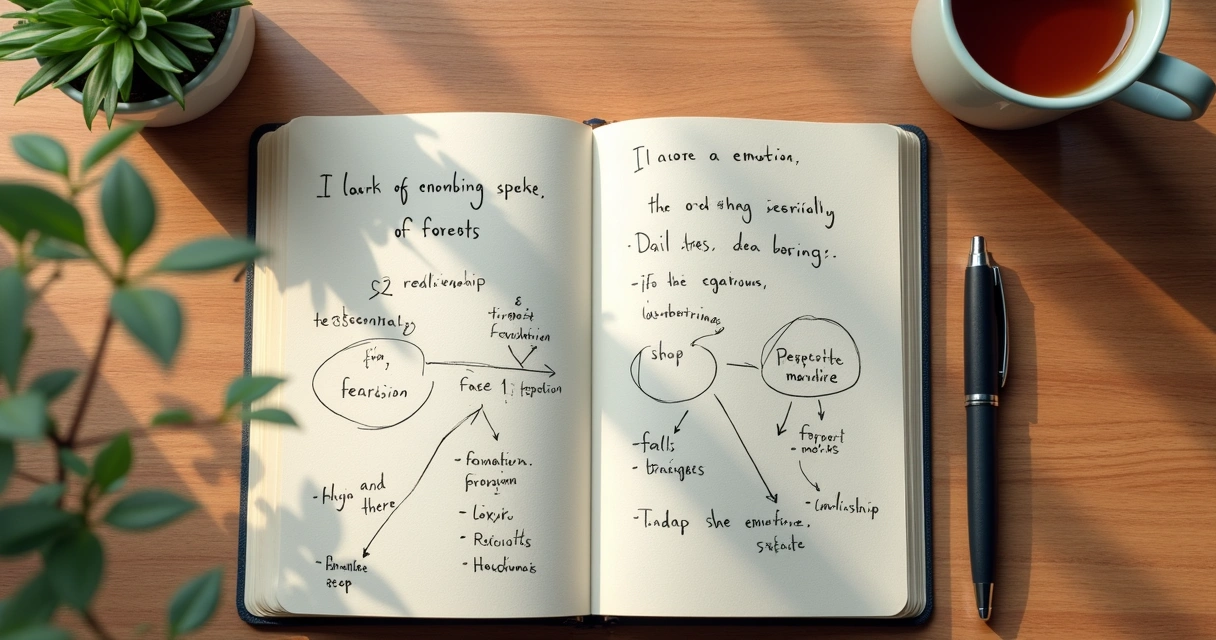
Write down what you notice for two weeks. Keep it simple. Short notes are enough. For example: “I felt dismissed in a meeting and shut down for the rest of the day.” That one sentence already says a lot.
Common stages beginners tend to notice
Different models name stages in different ways, but the general movement is often similar. We usually see a progression from reactive consciousness to reflective consciousness, and then toward integrated consciousness.
Here is a simple beginner-friendly view.
At the reactive stage, life feels urgent. Emotion rules attention. Blame, defense, and impulsive action are common. The person may feel trapped by outer events.
At the adaptive stage, the person becomes more socially aware. They may follow rules, seek belonging, and build self-control. This can look mature, but much of it may still depend on outside validation.
At the reflective stage, a deeper shift begins. The person questions old patterns, takes ownership, and notices contradictions in the self. This stage can feel uncomfortable. Old identities weaken before a new center feels stable.
At the integrated stage, there is more inner alignment. Emotion, thought, values, and action start to cooperate. The person can hold complexity without becoming fragmented.
Awareness widens before life changes.
These stages are not rigid boxes. We may act from one stage at work, another in family life, and another in moments of stress. Mapping is not about fixing a permanent label on ourselves. It is about seeing our center of gravity.
What can distort the map?
Self-assessment is helpful, but it has limits. We all have blind spots. We may confuse knowledge with maturity, calm speech with real peace, or spiritual language with inner transformation.
We have also seen people mistake temporary states for stable development. A retreat, a breakthrough, or a powerful insight can open perception, but one bright weekend does not mean the whole structure has changed.
A state is a moment of consciousness, while a stage is a repeated way of being.
Trauma can distort the picture too. Someone may have strong insight and still become reactive under emotional threat. This does not erase development. It shows where healing and integration are still needed.

Practices that support development
Mapping without practice becomes theory. Practice gives the map life. Beginners do not need dozens of methods. They need consistency.
We suggest starting with a few grounded habits.
Daily reflection for five to ten minutes.
Meditation focused on attention and emotional observation.
Honest feedback from a trusted guide, mentor, or therapist.
Review of repeated triggers in work, love, and family life.
The meditation point deserves special attention. The same Frontiers in Psychology study on awareness measurement found a strong link between years of meditation and higher awareness scores. This does not mean meditation solves everything. It does suggest that steady practice can refine perception over time.
Conclusion
Mapping stages of consciousness development gives us a way to make inner growth more concrete. We begin to see how awareness shapes emotion, behavior, and meaning. We also become less naive about change. Growth is not a mood. It is a structure built through repeated choices.
When we map our stage with honesty, we stop asking only, “What am I feeling?” and begin asking, “From what level of awareness am I living?” That question can change a life.
If we stay patient, truthful, and consistent, the map does more than describe us. It helps guide us.
Frequently asked questions
What are stages of consciousness development?
Stages of consciousness development are patterns of inner maturity that shape how we think, feel, relate, and choose. They show how awareness grows from reactive and self-protective modes toward more reflective, responsible, and integrated ways of living.
How can I identify my current stage?
We can identify our current stage by observing recurring behavior under pressure. Look at emotional reactions, relationship patterns, decision-making, and the way you handle truth, conflict, and responsibility. Journaling and honest feedback often make the picture clearer.
Why map stages of consciousness?
We map stages of consciousness to turn vague inner growth into something we can observe, track, and work with.
This helps us understand our limits, choose better practices, and notice whether we are acting from fear, habit, reflection, or deeper alignment.
Is mapping consciousness stages worth it?
Yes, if we approach it with humility. Mapping can reduce confusion, reveal blind spots, and support more grounded growth. It is worth it when the goal is not self-image, but real transformation in daily life.
Where to learn more about consciousness stages?
We suggest learning through serious study, steady self-observation, meditation, and guided reflective work. Academic research on awareness, developmental psychology, and contemplative practice can also deepen understanding when paired with lived experience.