


Every day, we face decisions with consequences that stretch far beyond our own lives. Some choices are small, almost invisible. Others ripple through a company, a family, a community. In our experience, the real challenge in decision making is not just choosing the "best" option, but doing so in a way that keeps our conscience clear and our values steady. Ethics is not an abstract add-on, but the true ground on which solid decisions are built.
When we have practical ways to connect our values to our actions, we feel less doubt and more clarity. Below, we share seven concrete tools to help anyone keep ethics at the heart of all decisions—big or small.
Ethical reflection: Slowing down before acting
It can be tempting to act fast, but we're convinced that taking even a single moment for ethical reflection changes outcomes. This tool asks one simple question before every decision:
Am I acting in a way that matches who I want to be?
When we bring this pause into our routines, we create a habit. Reflection becomes automatic. We notice when something feels off, and we can correct course. Over time, the habit grows. We learn to spot gray areas, rather than just reacting on autopilot.
Values clarification: Knowing what really matters
Alignment becomes possible only when our values are clear. Too often, people work, lead, or relate to others without ever asking themselves: What do I stand for? We encourage listing core values regularly.
- Choose three to five values you want to guide your life or work.
- Write a short statement about why each value matters to you personally.
- Place the list somewhere visible—or keep it handy for decisions, big or small.
This exercise is like tuning an instrument. When we're clear, our actions sound right. If we're out of tune, our choices clash, and we start to feel uneasy inside.
The ethical checklist: A structured compass
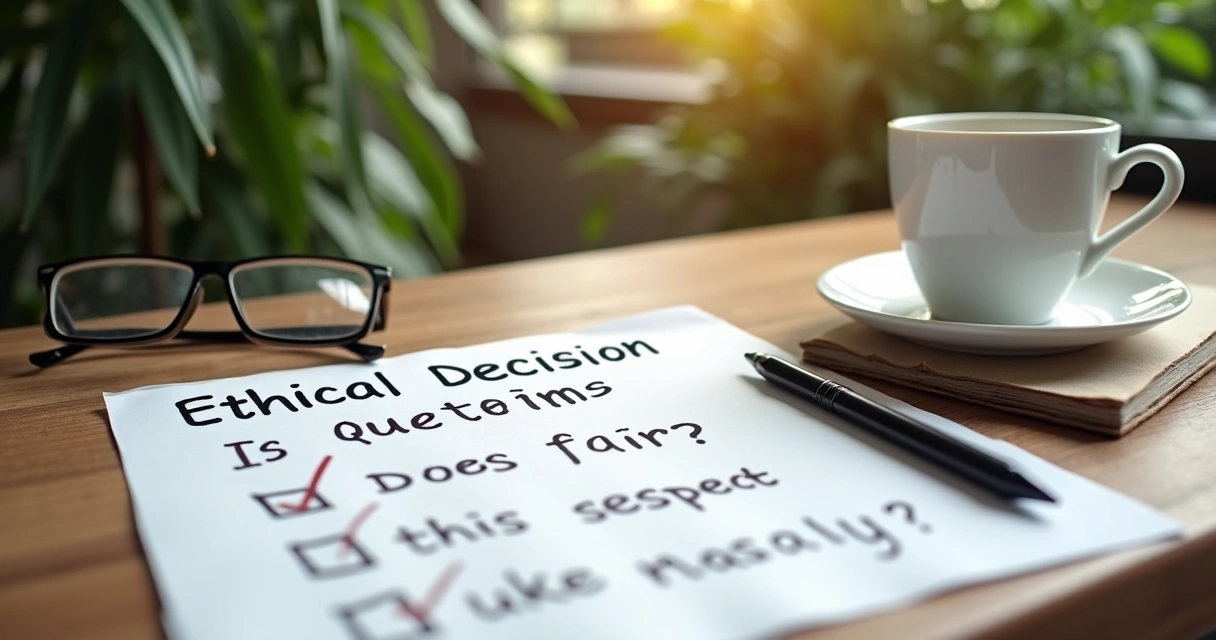
Uncertainty often clouds our mind when options pile up. That's where an ethical checklist helps. A simple, universal checklist might look like this:
- Is this decision fair?
- Does it respect others’ dignity?
- Would I feel comfortable if others knew about this choice?
- Is this aligned with the long-term, not just the short-term?
- Does it reflect my stated values?
In our experience, running through a checklist makes hidden risks and blind spots visible. Good intentions are not enough; structured questions keep us honest even when under pressure.
Stakeholder mapping: Seeing beyond ourselves
Every decision affects more than just the person making it. We have seen the power of simple stakeholder mapping, which helps us step outside our own perspective.
- List all people or groups affected by your decision.
- Think about their interests, needs, and feelings.
- Ask: Who gains? Who risks losing? Are there any unintended consequences?
We recommend visualizing these links on paper. This map is a living reminder that responsible choices include everyone touched by our actions, not only those right in front of us.
Scenario analysis: Testing decisions in advance
It is easy to overlook what could go wrong when we just want to move ahead. Scenario analysis brings imagination into ethics. We invite decision-makers to:
- Picture at least three possible outcomes: best case, worst case, and likely case.
- Ask: How would each scenario feel if I or someone I care about was affected?
- Notice which scenarios challenge, threaten, or support your values.
Practicing this step helps us see if we are drifting toward a choice that will haunt us later. We believe that preparation protects integrity.

Ethical dialogue: Inviting other voices
Dialogue, not just debate, builds ethical strength. In practice, this means:
- Inviting those involved (or impacted) to share concerns and hopes.
- Listening before judging or deciding.
- Seeking diverse viewpoints, especially those we might disagree with.
From what we have observed, including others in ethical decisions uncovers crucial information. This practice reduces blind spots and deepens understanding, especially in complex contexts.
Personal accountability plan: Staying true, even when alone
Ethics can lose its hold when no one is paying attention. To keep ourselves on track, we recommend creating a simple accountability plan:
- Set regular personal “ethics check-ins”—weekly, monthly, or after key decisions.
- Commit to discussing at least one difficult ethical choice with a mentor, colleague, or trusted friend every month.
- Write down lessons learned from these conversations to guide future choices.
It may seem small, but this consistent review is what keeps us honest. We act in line with our values not because others watch, but because we choose to watch ourselves.
Ethical learning journals: Reflecting and growing
The final tool is an ethical learning journal. After each meaningful decision, we suggest writing:
- What was the hardest part?
- What did you do well, and what would you change next time?
- Did you spot any small warning signs or moments of doubt?
Over the years, we have found that this kind of personal reflection does not just record events. It reveals patterns—moments when we stood strong, and moments where we could have been braver. This honest history shapes every choice that comes after.
Small acts, honestly documented, create ethical lives.
Conclusion
We believe that ethical decision making does not come from luck or a special personality trait. It depends on real practices, repeated in real life. Reflection, clarity, checklists, mapping, planning, dialogue, and reflection anchor us. Simple as they seem, these tools invite us to slow down, connect to what matters, and act with our conscience wide awake.
As we keep using these tools, our decisions start to align with who we want to be, both privately and out in the open.
Frequently asked questions
What is ethics in decision making?
Ethics in decision making means choosing actions that reflect honesty, respect, and responsibility, while caring about the well-being of everyone affected. It involves matching decisions with core values, social expectations, and a sense of personal integrity.
How to use ethics tools effectively?
To use ethics tools effectively, we recommend consistent practice. Start by clarifying personal or organizational values, then apply checklists, mapping, dialogue, and self-reflection during real decisions, not just in theory. The key is repetition—using the tools as habits, not just for special situations.
What are the best ethical decision tools?
The best ethical decision tools include values clarification, checklists, stakeholder mapping, scenario analysis, dialogue, accountability plans, and reflection journals. Each tool helps us see problems from a new angle and keep actions grounded in values.
Is it worth using ethics frameworks?
Yes, ethics frameworks provide structure that supports good choices, especially under stress or uncertainty. They reduce guesswork and help uncover risks before they become problems. People who use ethics frameworks often feel more confident and less regret after making big choices.
Where can I learn more ethical tools?
We encourage seeking out resources in books, respected articles, accredited courses, and from professional mentors in your field. Using these tools in real decisions—and reflecting on the outcomes—will deepen understanding over time.